Showing posts with label Cerro Blanco. Show all posts

Wednesday, May 25

Creating Awareness Abroad


Christine Parrow, Instructor
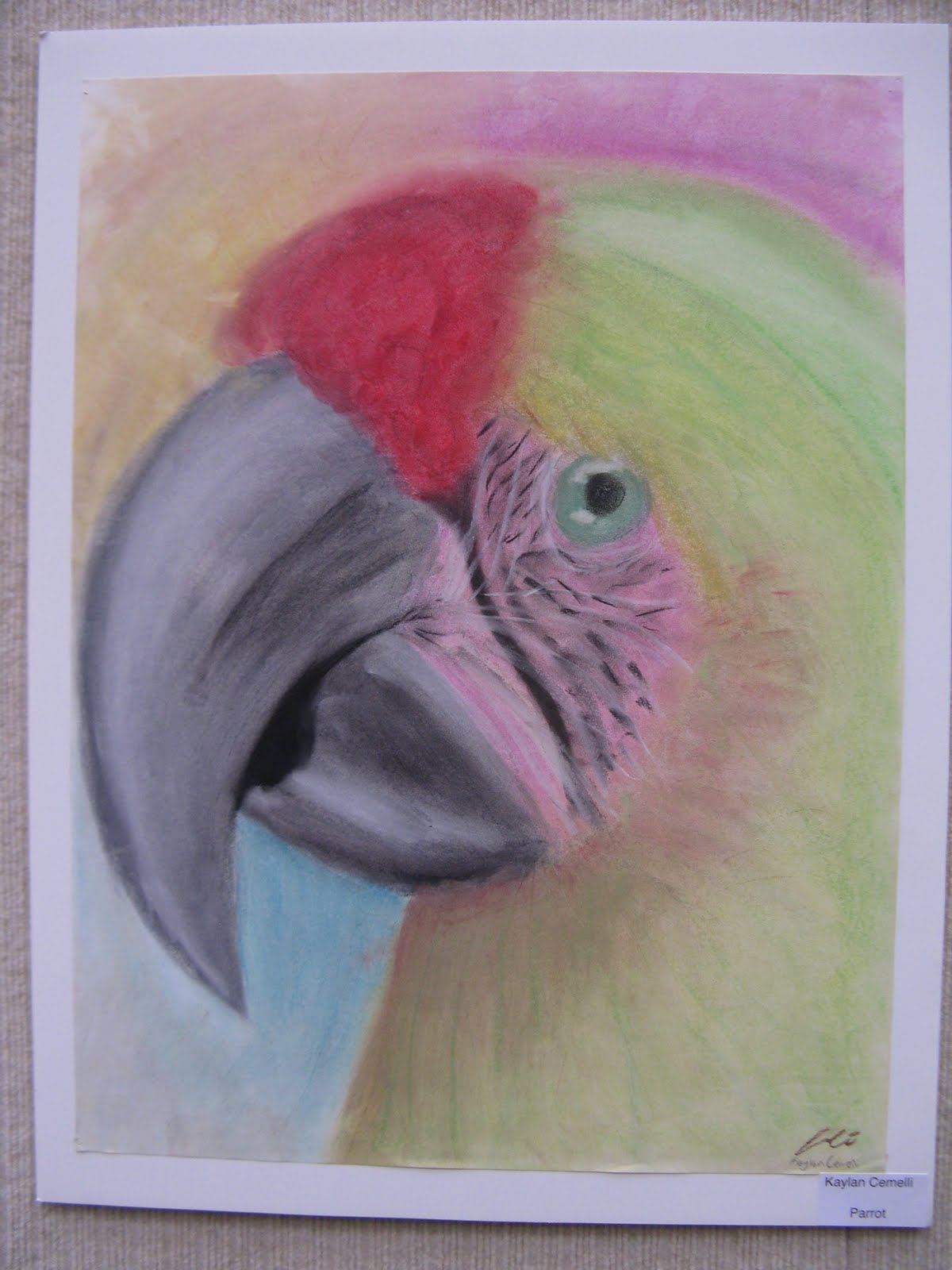
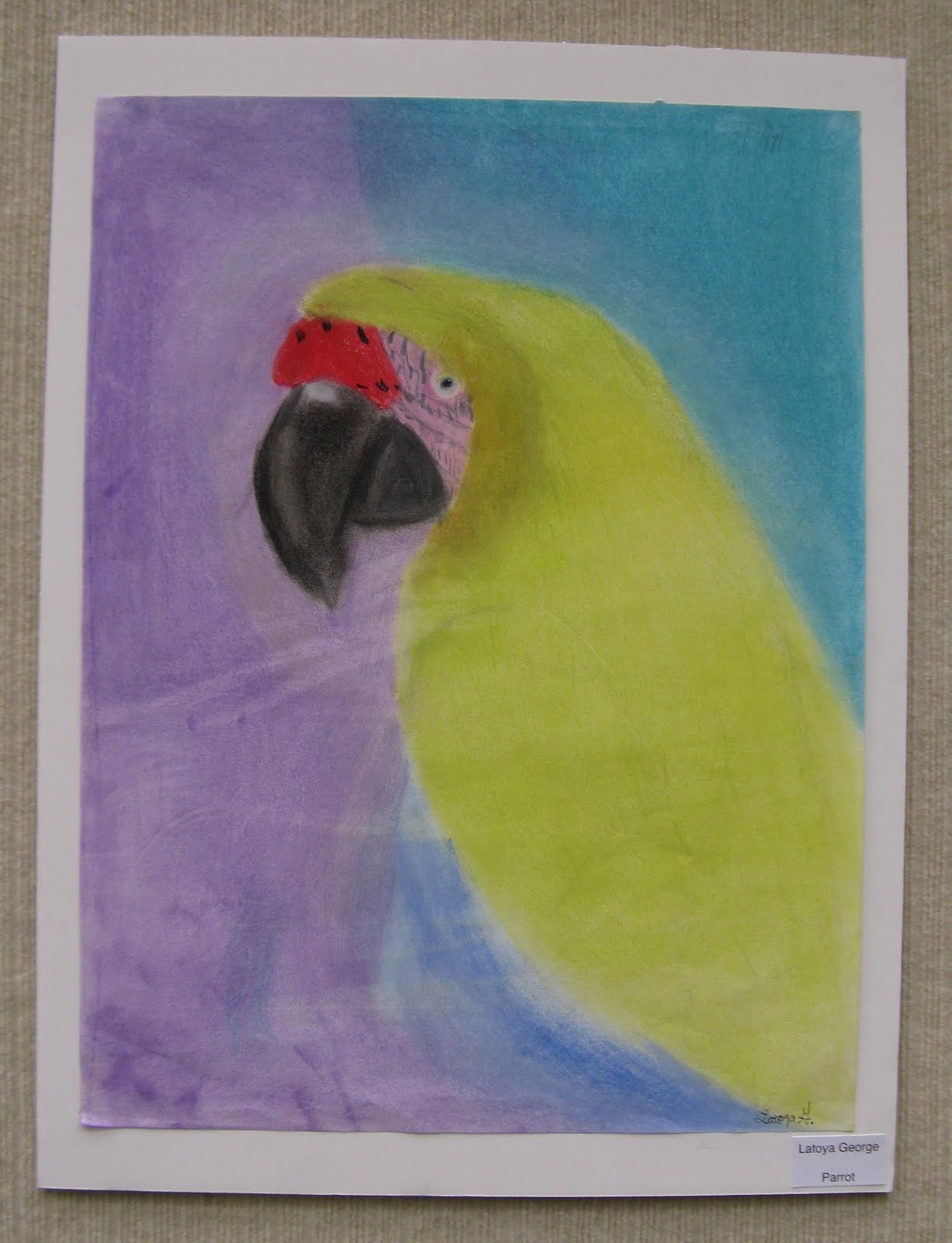
As the saying goes, the flutter of a butterfly's wings in Ecuador (or in this case, the flap of a macaw's wings) is felt all the way in upstate New York! Our dear friend, Jane Johnson has helped make the connection with Christine Parrow. Christine lives in the beautiful Catskill Mountains of New York State in the middle of a forest reserve (that sounds familiar!). She teaches art at the State University of New York at Sullivan County, and in her own words, "I always encourage my students to learn about the environment and environmental issues through projects and classwork. When I heard about Cerro Blanco in Ecuador and the amazing work you all do there to provide protection for the animals, birds and plants, I wanted to share it with my class".
Classroom 1
Classroom 2
Classroom 3 copy
Cerro Blanco sign
DRAWINGS
By Mike Daigle
By Jeralyn Walters
By Jillian Alexander 
By Nina Stewart
By Kaylan Cemelli
By Martin White
By Latoya George
By Carlee Maree
By Kaylan Cemelli
Christine showed her class our DVD on Cerro Blanco and she said the students "were all amazed". She said they especially related to the Great Green Macaw, "which is so magnificent but endangered". "We did not know about the dry tropical forest. Here we have rain and/or snow throughout the year. The reforestation project is inspiring, and the commitment of the staff and local people to keep the forest undeveloped, got a thumbs up from all of us".
We thank Christine and her students for their much appreciated support and for sharing their beautiful drawings with us. We hope you can someday come and visit us and meet our resident artist of sorts, Eduardo Jaime, who just produced some beautiful new mammal ID guides and who is also featured in a current exhibition of painted horses by well known artists in the city of Guayaquil. Eduardo manages to include natural elements in his rendition of "derzu" named after the famous hunter/tracker Dersu Uzala, of the famous Kurosawa film by the same name.
Mammals in Cerro Blanco (Front)
Mammals in Cerro Blanco (Back)


By Eduardo Jaime Arias


From the website http://arteurbano.com.ec/detalle-artista.php?aid=1001,"The work of Eduardo Jaime is constructed with patience and talent, in a series of thematic units that comprehends his particular vision of our natural surroundings. In the period of vegetation, his painting is transfigured, the same occurs with the animals and birds, reminiscences of those things that from an early age caused him amazement. Many of the themes intermix the visual splendor with a rich chromatics charged with meaning. This fecund dialogue conducts the painter to a organized esthetic exposition in which the deep root of equilibrium and order stands out. Eduardo Jaime not only is dedicated to capturing appearances, but also aspires to embody in them the total presence of image and spirit".


Coral Snake on the horse


Urban Art Guayaquil 2011 "Horses of Color" is an initiative that is inspired in the well known "Cow Parade" that was born in 1998 in Switzerland and which has toured some of the most important cities of the world, Zurich, Chicago, New York, Sydney, Houston, London, Santiago de Chile, Buenos Aires and Quito, Ecuador. 

Urban Art in Guayaquil 2011 "Horses of Color" is a cultural window that is integrated by 31 life sized figures of four emblematic horse races. They have converted in canvasses for famed artists from Guayaquil, "The Pearl of the Pacific" to show their creativity.


Details on the horse

Tuesday, April 12

Tangerine: Life as a Bird


About two years ago, I received an e-mail message from Jane Johnson.  She explained that she was in the process of writing a book on a Grey-cheeked Parakeet that has shared and brightened the lives of Jane and her husband Cliff.  My name was given to her as someone who knows the species in the wild and could help with observations, etc.
I was intrigued and answered Jane’s message, beginning a back and forth exchange that finally culminated in the publication of her beautiful book, “Tangerine: Life as a Bird” at the end of 2010.
The book focuses on Tangerine, a Grey-cheeked Parakeet (Brotogerispyrrhoptera) that has lived for several years with Jane and Cliff.  I myself rehabilitated and released back in the wild a Grey-Cheek, an endangered species throughout its limited range in Southwestern Ecuador to Northwest Peru.  I could relate toTangerine’s inquisitiveness as it explored the house and interacted with the wild animals outside.

An especially important part of the book is the connection with wild Gray-Cheeks and their habitat in the dry tropical forests of Ecuador.  We are blessed with flocks of Gray-cheeks in the Cerro Blanco Protected Forest that pass noisily through the trees as they stop to feed on the fruits and seeds of native forest trees and loudly scold any hawk, human or other potential threat that gets near them.
Jane and Cliff visited Cerro Blanco in January and after a day or two without seeing any Gray-cheeks in the supposed Mecca of the species, I went out early with our visitors and we were rewarded with multiple sightings of Grey-cheeks.
The book has been self published and shortly a web site will be up and running to handle sales, inquiries, etc.  A nice plug for our work in protecting Grey-cheeked habitat is mentioned, with a link to a campaign page that has been set up on the World Land Trust-US website http://worldlandtrust-us.org/index.php?page=cerroblanco, through which, you can make your tax deductible donations to support our work.  Thank you.

Monday, April 11

First National Census of Great Green Macaw Ara ambiguus guayaquilensis Carried Out in Ecuador


Eric Horstman


The National Conservation Strategy for the Great Green Macaw in Ecuador, which was reviewed and revised in 2009, includes as one of its policies, the implementation of projects for research and monitoring of populations of this critically endangered species in Ecuador.

While work has been done to monitor the local population in and around the Cerro Blanco Protected Forest as well as some forest remnants on private property in the Cordillera Chongon Colonche, no effort has been made to carry out a census of other populations in the species’ range in Ecuador.
Based on the experience acquired in a bi-national census of the same species carried out in Nicaragua and Costa Rica in 2009 and with the support of the Mohamed bin Zayed Species Conservation Fund, the census was organized and carried out in the provinces of Esmeraldas, Santa Elena and Guayas.
Observers were positioned at strategic sites where macaws have been recently spotted, from 6 AM to 7 PM on December 21, 2010.  Participants included park guards of the Pro-Forest Foundation in Guayas Province, forest guards of the Project Chongon-Colonche of Fundacion Natura and staff of the Jocotoco Foundation at the Rio Canande Reserve in Esmeraldas Province.
A total of six Great Green Macaws were spotted on December 21st, including five individuals in the Bosque Protector Chongon Colonche and one macaw at the Hacienda El Molino, near the Cerro Blanco Protected Forest, by a group of biologists of the Consejo Provincial del Guayas.  The Jocotoco Foundation reported that days before the census, two macaws were seen at Rio Canande.
The overall population of Great Green Macaws in Ecuador is estimated at between 60 and 80 individuals, so this census only scratches the surface of the potential population that exists.  We hope that this year with more time and the support of the authorities, that we can extend the census to more areas in the range of the Great Green Macaw in Ecuador.  My feeling is that this population estimate is perhaps overly optimistic, as the twin threats of deforestation and capture of macaws for the pet trade continues in Ecuador at a rapid clip.

Thursday, March 31

CONSERVING THREATENED AND ENDEMIC TREES OF THE ECUADORIAN DRY FOREST


The Ecuadorian Dry Forest is one of the planet’s most endangered ecoregions, with around 1% of the original forest remaining in the Ecuadorian coastal provinces of Esmeraldas, Manabí, Guayas and El Oro. 
The Fundación Pro-Bosque (Pro-Forest Foundation) has focused much of its work during the last eighteen years, on protecting and restoring this critically endangered ecosystem in the Cerro Blanco Protected Forest and adjacent areas in the Cordillera Chongón-Colonche.
As deforestation and urban expansion continue to gobble up thousands of acres of native forest in Ecuador every year, once biologically diverse landscapes are being transformed into sterile and barren landscapes, the ecological services of these once verdant landscapes destroyed.
But nature, if given a chance, has incredible recuperative properties and our experience has shown that Ecuadorian Dry Forest can be restored, if its main nemesis, forest fires, is controlled to allow natural regeneration to occur. 
According to a floristic inventory carried out by the JatunSacha Foundation and National Herbarium, the Cerro Blanco Protected Forest’s 14,826 acres include more than 80 tree species.  Thanks to the support of the World Land Trust of the United Kingdom, too date, the Pro-Forest Foundation has planted 353,851 native dry forest trees of 35 species in a total of 882 acres of cut-over land in Cerro Blanco.  The overall survival rate of the planted trees has been between 50 and 65% and we are concerned that the drought of over a month during the current rainy season will affect the 55,000 trees that have been planted this year.

To insure a future for the Ecuadorian Dry Forest, we must work to educate and create awareness among local community members who’s grandparents still remember the forest and the huge trees once found there, memories that are slipping away. 
Thanks to the support of the Rufford Small Grants for Nature Conservation, we began working in October 2010 until the present in developing and implementing a project to educate local children and adults in the following communities surrounding Cerro Blanco, Puerto Hondo, Casas Viejas and Chongon.  Educational materials have been developed, including a tree guide, poster illustrating dry forest trees and a book on propagation of native dry forest trees by Michael Morgan, former Peace Corps volunteer who worked extensively to identify techniques for the propagation of native dry forest tree species.  So far, 287 kids between 8 and 14 years of age have been visited, received presentations on native trees and taken part in the fun activities included in the tree guide.


With classes about to begin again in the coast, we look forward to resuming our work in the local schools with the help and support of schoolteachers and administrators as well.

PHOTOS

ACTIVITIES WITH KIDS