Thursday, August 22

FIRST ECO FESTIVAL HELD IN THE CERRO BLANCO PROTECTED FOREST, SUNDAY JUNE 2nd

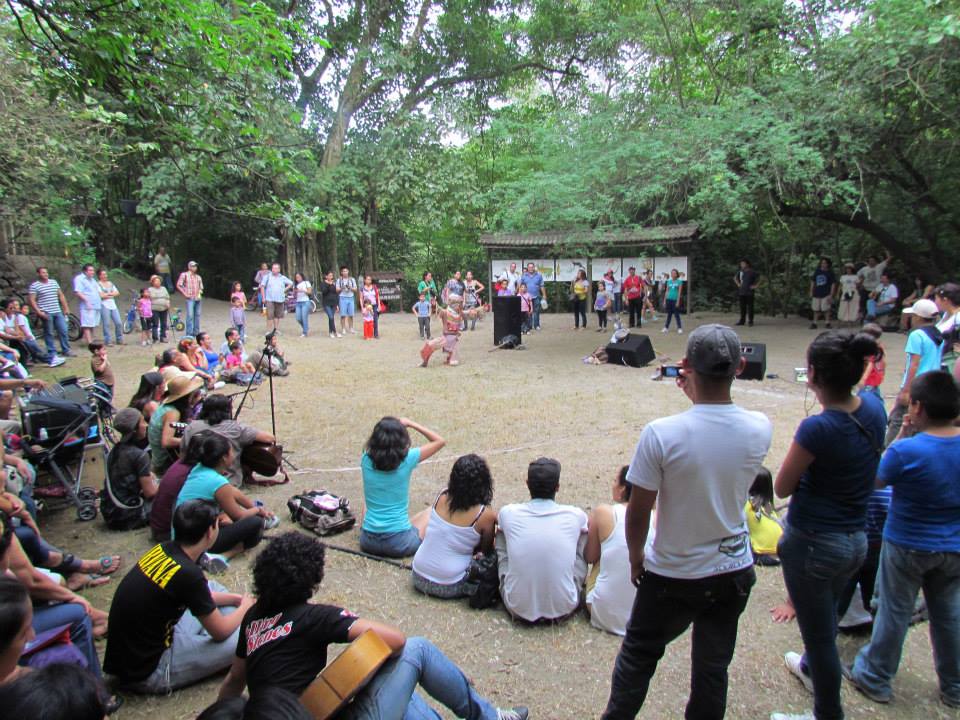
The Pro-Forest Foundation in conjunction 17 other local organizations and carried out the first Eco Festival in the Cerro Blanco Protected Forest on Sunday June 2nd with a total of 3,400 participants, which completely exceeded the expectations of the organizers.

The stated objective was to celebrate the 20th anniversary of the Foundation’s creation as well as the Day of the Child and the Day of the Environment.

View blog
But more than celebrating dates, the eco festival provided an opportunity for the people of the city of Guayaquil, Ecuador’s largest with more than three million inhabitants and a definite lack of parks and other green spaces, to enjoy the dry tropical forest that Cerro Blanco protects, with their families. People from a cross section of Ecuadorian society participated young and old alike, but the large number of children who participated marked the day.


An extensive program was prepared beginning with the inauguration of the festival at 9 AM and extending to 5 PM. A eco fair was held that included more than 25 stands with everything from organic food sold directly by the farmers that grew them to boy and girl scouts showing their outdoor skills in demonstrations, an artist painting a forest scene live in person, a Rastafarian group, artists displaying a multitude of handicrafts and environmental groups working on various fronts in the city including protecting and reforesting mangroves, etc.


A total of 12 scheduled workshops were held (as well as some impromptu ones) at the fair ranging from the conservation of birds for kids to how to live in harmony with nature, including the promotion of vegetarianism and organic gardening with composting, etc.


Various local artists donated their time to carry out a series of more than 10 standing room only presentations in the Cerro Blanco open air amphitheatre, including the yoga of laughter, puppet theatre and music provided by local folk, rock and reggae groups with great sounding names such as Green Awareness (Conciencia Verde) and King Shrimp (Rey Camaron).


New attractions in Cerro Blanco were also inaugurated, including a 2.5-mile bike path. Two local bicycle groups with a total of 70 participants met in a park in Guayaquil and pedaled out the 4 miles to Cerro Blanco to help inaugurate the bike path. Cars were parked outside the front gate and people invited to enter by foot and by bike. A meditation area was also inaugurated, with totem poles of monkeys, great green macaws and jaguars carved by a local artist in honor of the original inhabitants of the area, the Huancavilcas. Both yoga and meditation classes were offered by local groups.


Ecuadorians are notorious for generating a lot of trash at public events, but guidelines had been laid down in advance, including no selling of water or soft drinks in plastic bottles and people were encouraged to bring their own and/or use the strategically placed water jugs. No handouts or leaflets were allowed among the participating institutions, which also included representatives of the Ecuadorian Ministry of the Environment and a newly created bike unit of the National Police that works in the tourist sites in the city of Guayaquil.


As a result, the impact on Cerro Blanco was minimal and walking the roads and trails the day after, the air was filled with bird calls, agoutis ran off into the nearby vegetation and howler monkeys could be heard up in the ravines as if more than 3,000 people hadn’t been there the day before.


Although the traditional news media by and large ignored the event, the message rang out loud and clear, Guayaquileños love their natural areas such as Cerro Blanco and other sites in the dry tropical forests and mangroves that survived the onslaught of the rapid urbanization of the city in the last twenty years.


Many people who both participated and also who didn’t are asking that the festival be repeated and it is hoped that the authorities have gotten the message; Guayaquil’s natural areas must be respected.


Cerro Blanco is under threat from a proposed highway that would be built directly with the protected forest boundaries and put its abundant and diverse flora and fauna at risk not only from the impacts of the road construction, but also future attempts to invade the forest by land traffickers to urbanize, tree cutters and hunters.


Eric Horstman, the executive director of the Pro-Forest Foundation and the person behind the eco festival in one of his interventions asked people to remain alert and support Cerro Blanco against any future threats.

The Ecuadorian Ministry of the Environment and Senagua, a government water regulation entity has formally requested the Ministry of Transport and Public Works to provide an alternative route for the proposed highway which would link Guayaquil with the beaches of the nearby Santa Elena Province, but would be re-routed away from Cerro Blanco.




FOTOS CORTESÍA DE: Peter Rodríguez , Jaime Camacho, Fundación Pro-Bosque

Thursday, July 19

Great Green Macaw in the U.S. Endangered Species Act

Pro-Forest Foundation Executive Director, Eric Horstman was interviewed recently by Sarah Leon of the U.S. Fish and Wildlife Service, to hear the podcast, please go to this link http://www.fws.gov/endangered/about/ep_30_2012.html.  The great green macaw is one of four macaw species that were proposed for listing on July 6th, 2012 by the U.S. Fish and Wildlife Service under the U.S. Endangered Species Act (the other macaw species include hyacinth, military and scarlet macaw).  If the great green macaw is officially listed under the U.S. Endangered Species Act, it will represent an important step forward to extend protection in the United States for the species, which is threatened by capture of macaws for the illegal pet trade and habitat destruction in the lowland rain and dry forests where it is found throughout its range from Honduras to Ecuador.

Friday, March 9

Signing of Agreement between the Universidad Tecnica de Quevedo and the Pro-Forest Foundation

February 2012
On February 17th, Eric Horstman traveled to the city of Quevedo to sign an inter institutional agreement in representation of the Pro-Forest Foundation with the Dean of the Universidad Tecnica de Quevedo.  The signing of the agreement paves the way for future students from this university carry out internships and thesis projects in the Cerro Blanco Protected Forest with the Pro-Forest Foundation.

In addition, Eric Horstman made a presentation on the potential of ecotourism in dry tropical forest in the closing of an ecotourism seminar organized by the university.

Signing of Agreement between the Pro-Forest Foundation and The Nature Conservancy, Coca Cola Foundation.

February 2012
Sylvia Benitez, the Ecuador country director of The Nature Conservancy participated in the tree planting program and in representation of TNC, signed a interinstitutional agreement with Eric Horstman in representation of the Pro-Forest Foundation to coordinate future actions in favor of protection and restoration of the dry tropical forests of the Cordillera Chongon Colonche.

Carolina Martinez of the Coca Cola Foundation also participated in the tree planting.  Thanks to the support of the Coca Cola Foundation, five hectares of cutover land within the Cerro Blanco Protected Forest will be reforested this year, as part of their environmental programs related to protecting and/or restoring water sources.

4th Annual Reforestation Program in Cerro Blanco

February 2012
With the goal of involving the public in our reforestation program, on February 10th and 11th our 4th annual tree-planting program was carried out in the Tres Bocas area of the Cerro Blanco Protected Forest. 

A total of 140 volunteers participated, including representatives and participants of Fundacion Coca Cola, The Nature Conservancy, Concejo Provincial de Guayas, Holcim, Pronaca, Universidad Catolica, ESPOL, Tecnologico Espiritu Santo, Universidad de Guayaquil, Club Ecologico de Puerto Hondo, etc.

Before going to the tree-planting site, participants received information on the Ecuadorian Dry Tropical Forest Ecoregion from forester John Ayon as well as a demonstration on how to properly plant trees.  A total of 1,000 trees were planted as part of the program, which is supported by the World Land Trust.


Environmental Responsibility of private businesses of Guayaquil to restore dry tropical forest

January 2012
In conjunction with the annual rains, the 1sttree-planting program of the year “Wake up with Pure Air” organized by the Ecuadorian-German Chamber of Commerce and the Pro-Forest Foundation was carried out on Saturday, January 21st in the Cerro Blanco Protected Forest.

A total of 150 people from six businesses members of the chamber of commerce participated in the planting of native dry tropical forest trees in the area known as “Tres Bocas” in a recently purchased property, the “Predio Carbo”, with the financial support of the World Land Trust and Netherlands Committee of the World Conservation Union IUCN.  The participating businesses included Pro Credit, Panaderia California, DHL, Hamburgsud, Importadora Sucre and Café de Tere.  A total of 800 trees were planted in an area of secondary scrub vegetation in Cerro Blanco. 

Our goal is to restore the original (or a close proximity) Ecuadorian Dry Tropical Forest that was cut down before the Cerro Blanco Protected Forest was created.  The tree planting forms part of a tree-planting program supported by the World Land Trust.  A planned 45,000 trees are being planted in 2012.


CIDA Volunteers in Cerro Blanco

July 2011 to January 2012
Thanks to the long standing support of Jos Nolle of Niagara College, Canada, two CIDA volunteers, Cassandra Musungayi and Lindsay Corolis worked with the Pro-Forest Foundation from July, 2011 to January, 2012. The work of Cassandra focused on environmental education with school kids in surrounding communities adjacent to the Cerro Blanco Protected Forest.

Cassandra's efforts were focused in the village of Puerto Hondo, where she carried out weekly environmental education activities with kids from the Marianita de Rodas school and the youth environmental education club.

Cassandra also organized and put on a English course for staff of the Pro-Forest Foundation, which was well received. Lindsay's work focused on designing materials to be used in the EA activities as well as help  promoting the work of the Pro-Forest Foundation and Cerro Blanco Protected Forest through the internet. Thank you both for your help and support!