Wednesday, September 25

Baby Sloth Yogi New Resident of Cerro Blanco

We have a new resident at Bosque Protector Cerro Blanco - a baby sloth who goes by the name of Yogi. She was brought here yesterday afternoon after the police were called out to a school where she had been found (along with another adult, not the parent, who was later released straight into the forest here at Cerro Blanco). It wasn’t clear what had happened to Yogi, she had no obvious injuries but had been lost or abandoned by her mother for some reason.


Small, furry, and cute, she is a popular new recruit to the animal rescue centre at Cerro Blanco. However, as she is so young she can’t stay outside at night and needs a lot of care, attention and a warm place to sleep. So, until she is fully grown she will be sleeping in the house of two volunteers from England who live onsite. They will be feeding and taking care of her until she is big enough to go back to the forest. Her diet at first will be lactose-free milk and gradually leaves will be introduced.


Sloths are solitary animals only found in Central and South America; they are tree dwelling and move slowly due to their very slow metabolism, which takes a long time to digest their diet of leaves. Although sloths aren’t an endangered species they do suffer from an increasing loss of habitat and the other indirect and direct impacts of human activity. They can’t move out of the way when trees are cut down and once on the ground are very vulnerable to getting hurt or being separated from each other (if they have young). Sometimes they are also targeted by people; Cerro Blanco has before been home to two adult sloths which were found injured, one with bullet injuries, which unfortunately later died, and the other with a machete wound to the back of its head which was nursed back to health and released back into the forest. Yogi will be kept and cared for at Cerro Blanco for the next few months until she is fully grown and hopefully ready to be released into the protected forest of Cerro Blanco. 


Tuesday, September 24

Bosque Protector Cerro Blanco the First Ecuadorian AICOM

On the 2nd July 2013 the Latin American Network for the Conservation of Bats (Red Latinoamericana para la Conservación de los Murciélagos) - RELCOM, declared the Bosque Protector Cerro Blanco in Guayaquil an Area of Importance for Conservation of Bats (Área de Importancia para la Conservación de los Murciélagos) - AICOM. 

The Bosque Protector Cerro Blanco is the first Ecuadorian reserve to be accredited with an AICOM. Previously the Cuevas de San Antonio de Pichincha, in the Pichincha province, had been declared a Place of Importance for the Conservation of Bats (Sitio Importante para la Conservación de Murciélagos) - SICOM, but this is the first nomination and declaration of an AICOM for the province of Guayas and Ecuador as a whole. These are the only two reserves in Ecuador that have been recognized for their efforts in the conservation of these flying mammals. 


So far Cerro Blanco has registered 32 species of bats, those listed below being considered the most important:

- Artibeus fraterculus (a dry forest endemic) - Fraternal fruit-eating bat
- Micronycteris megalotis - Little big-eared bat
- Platyrrhinus matapalensis - Western broad-nosed bat 
- Eptesicus innoxius (a dry forest endemic) - Harmless brown bat
- Molossus molossus  - Common mastiff bat
- Eumops wilsoni - Bonneted bat 

One of the more unique species of bat found at Cerro Blanco is the Noctilio Leporinus (Fisherman bat), which uses it power to fly low over the water to catch fish. Its is estimated that this bat can catch 30 or 40 fish of up to 80mm in length in a single night.


Since 2007 the Fundación Pro-Bosque at Cerro Blanco has dedicated much effort towards the conservation of bats, with the Biologist Jaime Salas creating an inventory of species found at Cerro Blanco, and the Graduate Leonardo Álava, maintaining and updating it. The have also developed an educational program for school children, including the construction and strategic placement of wooden roosts for bats, and the distribution of a bat comic.  

 For more information please contact Fundación Pro-Bosque on 0986225077 or email  fundacionprobosque@ymail.com / fund.probosque@gmail.com


Friday, September 20

Private Protected Areas Congress, Chile

In representation of Fundación Pro-Bosque, Eric Horstman participated in the 10th Latin American Congress of Private Reserves and Original Peoples held in Valdivia, Chile, August 19th through 23rd.  Eric made two presentations at the Congress, the first was "The Cerro Blanco Protected Forest: A Private Conservation Initiative Conserving and Restoring the Ecuadorian Dry Tropical Forest" and the second was "The Biological Corridor Between the Cerro Blanco and Chongón Colonche Protected Forests: A Conservation Initiative With Private Property Owners" in representation of Jaime Camacho of The Nature Conservancy. Both presentations were well received by the participants. The Congress brought together more than 300 representatives of both governmental and non governmental organizations, working in private protected area conservation, from several countries in Central and South America, the Caribbean as well as North America.  

The themes of the Congress included the following:


- Public politics and incentives related to both private protected areas and original peoples

- Original Peoples: worldwide much of the remaining natural areas are found on indigenous people's lands. Valdivia is located in an area where the Mapuche indigenous group live and representatives of the Mapuches as well as Aymara from Bolivia and other indigenous groups actively participated in the Congress


- Productive Activities: different types of initiatives (agriculture, land purchase, handicrafts, etc) to help finance biodiversity conservation


- Sustainable Tourism


- Natural Laboratories for Investigation


- Education and Rescue of Natural Patrimony.


Jim Barborak, one of the Congress keynote speakers, made an important point, using the analogy of a table needing more than one leg to be fully supported, that for private protected areas to be sustainable they must not focus exclusively on tourism, but also on these other factors. 


The next Congress will be held in Costa Rica.


Wednesday, September 18

Experiences in England, by Denis Mosquera

Editors Note: At the invitation of our partner organization World Land Trust, Denis Mosquera traveled to the UK to represent Fundación Pro-Bosque in the World Land Trust stand in the annual UK Bird Fair. Here are some of Denis’ thoughts about his experience.

If you never visit a place you will never find out what it´s really like. And throughout my life I have seen many representations of cities, towns, and ecosystems in England, at different times and at different climates, and have always thought that it seems a very nice country. However my expectations were easily surpassed the first day of being in England, which turned out to be a big learning step in many aspects, including language, society, birding development, history, ecotourism, transportation, and many others which I have not named because it is never ending. From the first day at the Bird Fair at the Rutland Nature Reserve I realized that there were many people who thought the same thing about Ecuador. For them visiting my country was also a dream which produced the same impact for them as it did for me. This gave me great confidence to introduce myself as a representative of an Ecuadorian conservation organization.


One of the most interesting aspects of the Bird Fair was that most of the public with whom I had interaction with were aware of the most famous places in Ecuador for birding, wildlife and cuisine, however a good percentage of them did not know for example that our dry forest Cerro Blanco is so close to Guayaquil, the largest city in Ecuador, or the fact that the Galapagos Islands are part of Ecuador. These topics were some of my favorites in the conversations I had with visitors and exhibitors at the Bird Fair 2013.


This event allowed me to experience many different cultures and perspectives, all framed around the world of birds. Subjects covered included bird guides worldwide, multinational bird watching companies, conservation institutions, art, technology etc. I am sure this has allowed me to open my mind and expand my thoughts on all topics of interest to me. I am also sure this experience will help tremendously in the developments taking place at Cerro Blanco Protected Forest in regards to bird watching and ornithological research in the dry forest. For example, I made many contacts with various institutions, such as bird watching companies, that might be interested in including Cerro Blanco in their itineraries.


Sharing all that time with the World Land Trust team was very rewarding for me in every way and I appreciate all their patience and concern for the organization of my activities, accommodation, luggage transfer and everything they did to help me. Personally, I also think that thanks to them my English is about 200% better than before traveling to England, which was my first time in an English-speaking country.


It was very interesting to do some bird watching while I was in Halesworth, where the office of the World Land Trust is located. And I thank Dan Bradbury for being such a wonderful guide, for the places we visited and the large number of species that we saw. I think it was interesting for him too, to see my excitement at the most common birds, like the beautiful Magpie.


Friday, September 6

Environmental Education: Visit to local school and an unexpected interview for school paper

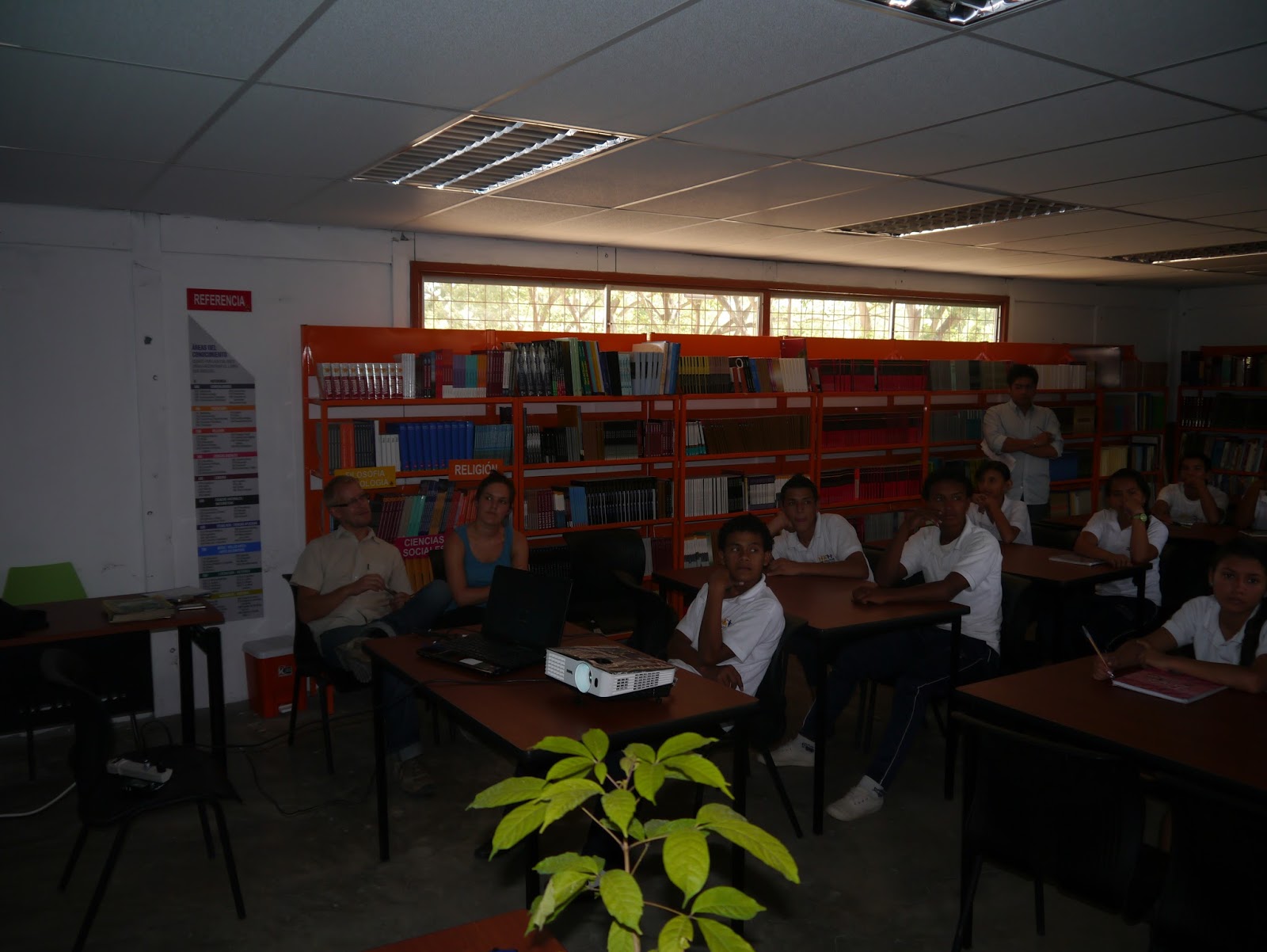
This week, as part of it's environmental education program, the Pro-Bosque Foundation made two visits to the Unidad Educativa Anne Sullivan School, which is situated on the via de la Costa just in front of the entrance to the Cerro Blanco forest. Leading these visits was Tania Rios - Environmental Education, and Jonny Ayón - Reforestation, from the Pro-Bosque Foundation. The main theme of the visits was the reforestation of the tropical dry forest and the key objective was to increase awareness of reforestation and the associated benefits to the environment. The visits also served to promote participation in reforestation activities, as well as build an understanding of the forest and the importance of maintaining a balance in the planet’s ecosystems.

Even though the Anne Sullivan School is less than 500 meters from the Cerro Blanco forest, very few students said that they had ever visited, and so it is of high importance to generate interest in trees and deliver the message that such a beautiful place is so close by! Hopefully, with visits such as this, more children will be encouraged to take an interest in nature and visit Cerro Blanco to enjoy the forest and see it for themselves.


With the help of some materials and a presentation by Tania Rios and Jonny Ayón, a conversation was generated with the students, from classes in the first year of high school, which covered  subjects such as ‘What is a tree?’, ‘How to successfully grow a tree’ and ‘What benefits do trees bring?’.


Sharing the experiences of these visits were two volunteers from England, who have started a 2 ½ month volunteering program at the Pro-Bosque Foundation. The volunteers are taking part in the volunteer program to learn more about the protection of tropical dry forests and to support the work at Cerro Blanco.


During the second visit to the school, a group of students approached the Pro-Bosque team and the volunteers to express an interest in doing an interview about the unusual visit of foreigners to their school. The students explained that they were creating a school newspaper and that they thought there would be interest in including a piece about the volunteer’s visit. Therefore, the volunteers spent a bit of time answering the student’s questions, and are now keen to see their words in print when the newspaper is ready!


It is hoped that these visits will help to promote a culture of conservation amongst the students, as well as an interest in visiting the forest, or starting their own organic garden or tree planting project at home or at school.


Thursday, August 22

FIRST ECO FESTIVAL HELD IN THE CERRO BLANCO PROTECTED FOREST, SUNDAY JUNE 2nd

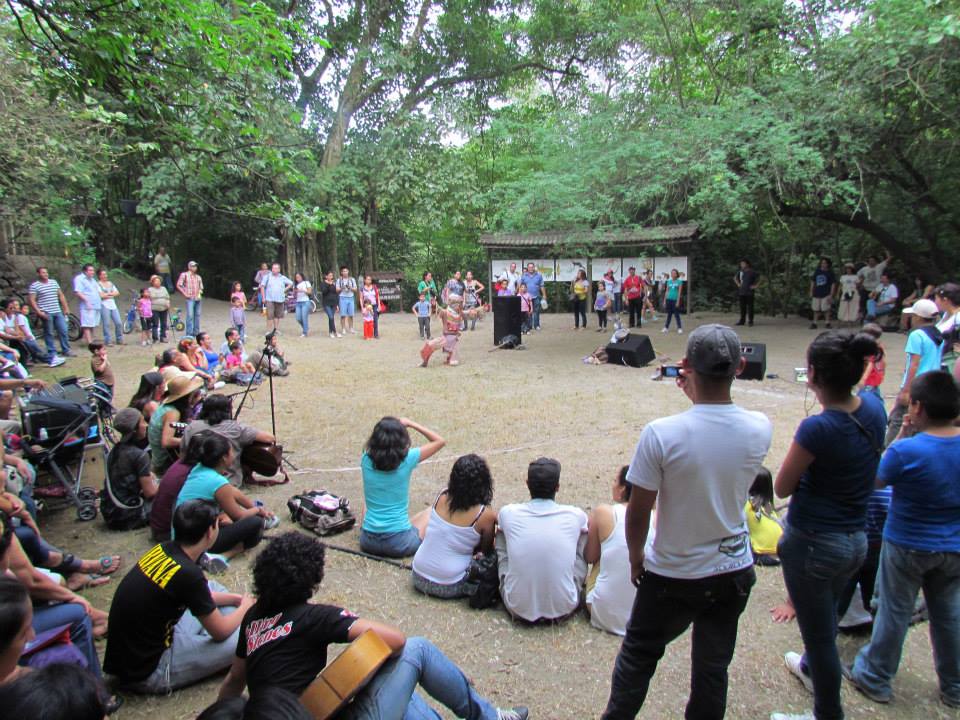
The Pro-Forest Foundation in conjunction 17 other local organizations and carried out the first Eco Festival in the Cerro Blanco Protected Forest on Sunday June 2nd with a total of 3,400 participants, which completely exceeded the expectations of the organizers.

The stated objective was to celebrate the 20th anniversary of the Foundation’s creation as well as the Day of the Child and the Day of the Environment.

View blog
But more than celebrating dates, the eco festival provided an opportunity for the people of the city of Guayaquil, Ecuador’s largest with more than three million inhabitants and a definite lack of parks and other green spaces, to enjoy the dry tropical forest that Cerro Blanco protects, with their families. People from a cross section of Ecuadorian society participated young and old alike, but the large number of children who participated marked the day.


An extensive program was prepared beginning with the inauguration of the festival at 9 AM and extending to 5 PM. A eco fair was held that included more than 25 stands with everything from organic food sold directly by the farmers that grew them to boy and girl scouts showing their outdoor skills in demonstrations, an artist painting a forest scene live in person, a Rastafarian group, artists displaying a multitude of handicrafts and environmental groups working on various fronts in the city including protecting and reforesting mangroves, etc.


A total of 12 scheduled workshops were held (as well as some impromptu ones) at the fair ranging from the conservation of birds for kids to how to live in harmony with nature, including the promotion of vegetarianism and organic gardening with composting, etc.


Various local artists donated their time to carry out a series of more than 10 standing room only presentations in the Cerro Blanco open air amphitheatre, including the yoga of laughter, puppet theatre and music provided by local folk, rock and reggae groups with great sounding names such as Green Awareness (Conciencia Verde) and King Shrimp (Rey Camaron).


New attractions in Cerro Blanco were also inaugurated, including a 2.5-mile bike path. Two local bicycle groups with a total of 70 participants met in a park in Guayaquil and pedaled out the 4 miles to Cerro Blanco to help inaugurate the bike path. Cars were parked outside the front gate and people invited to enter by foot and by bike. A meditation area was also inaugurated, with totem poles of monkeys, great green macaws and jaguars carved by a local artist in honor of the original inhabitants of the area, the Huancavilcas. Both yoga and meditation classes were offered by local groups.


Ecuadorians are notorious for generating a lot of trash at public events, but guidelines had been laid down in advance, including no selling of water or soft drinks in plastic bottles and people were encouraged to bring their own and/or use the strategically placed water jugs. No handouts or leaflets were allowed among the participating institutions, which also included representatives of the Ecuadorian Ministry of the Environment and a newly created bike unit of the National Police that works in the tourist sites in the city of Guayaquil.


As a result, the impact on Cerro Blanco was minimal and walking the roads and trails the day after, the air was filled with bird calls, agoutis ran off into the nearby vegetation and howler monkeys could be heard up in the ravines as if more than 3,000 people hadn’t been there the day before.


Although the traditional news media by and large ignored the event, the message rang out loud and clear, Guayaquileños love their natural areas such as Cerro Blanco and other sites in the dry tropical forests and mangroves that survived the onslaught of the rapid urbanization of the city in the last twenty years.


Many people who both participated and also who didn’t are asking that the festival be repeated and it is hoped that the authorities have gotten the message; Guayaquil’s natural areas must be respected.


Cerro Blanco is under threat from a proposed highway that would be built directly with the protected forest boundaries and put its abundant and diverse flora and fauna at risk not only from the impacts of the road construction, but also future attempts to invade the forest by land traffickers to urbanize, tree cutters and hunters.


Eric Horstman, the executive director of the Pro-Forest Foundation and the person behind the eco festival in one of his interventions asked people to remain alert and support Cerro Blanco against any future threats.

The Ecuadorian Ministry of the Environment and Senagua, a government water regulation entity has formally requested the Ministry of Transport and Public Works to provide an alternative route for the proposed highway which would link Guayaquil with the beaches of the nearby Santa Elena Province, but would be re-routed away from Cerro Blanco.


FOTOS CORTESÍA DE: Peter Rodríguez , Jaime Camacho, Fundación Pro-Bosque